🆘 Mental Health Crisis? iCall: 9152987821 | Vandrevala Foundation: 1860-2662-345 (24×7) | Emergency: 112
✦ Science & Soul in the Service of Wellness ✦
You Are Not Broken.
You Never Were.
India's most comprehensive LGBTQ+ mental health encyclopedia — science, identity, law, coming out tools, crisis support, and unwavering affirming care by Dr. Akash Parihar, Kota.
🌈 A Message for Those Still in the Closet
If you are reading this in secret — know this with certainty: your feelings are real, your identity is valid, and you deserve to live with full dignity and joy. Being LGBTQ+ is not a disease, not a sin, not a foreign concept — it is a natural part of human diversity documented in India for thousands of years. Every major medical body in the world has confirmed this. When you are ready — on your own terms — support is here. The world is changing. India is changing. And you have a place in it. 🏳️🌈
आप टूटे नहीं हैं।
आप कभी नहीं थे।
भारत का सबसे व्यापक LGBTQ+ मानसिक स्वास्थ्य विश्वकोश — विज्ञान, पहचान, कानून, और डॉ. आकाश परिहार, कोटा द्वारा सहायक देखभाल।
🌈 उन लोगों के लिए जो अभी भी छुपे हैं
यदि आप इसे छुपकर पढ़ रहे हैं — यह जान लीजिए: आपकी भावनाएं असली हैं, आपकी पहचान वैध है। LGBTQ+ होना कोई बीमारी नहीं है, कोई पाप नहीं — यह मानवीय विविधता का एक स्वाभाविक हिस्सा है। हर प्रमुख चिकित्सा संस्था ने इसकी पुष्टि की है। जब आप तैयार हों — आपकी शर्तों पर — सहायता यहाँ है।
📚 Encyclopedia Contents — 20 Major Topics
The Science of Sexual Orientation & Gender Identity
Sexual orientation — whether someone is gay, straight, bisexual, or elsewhere on the spectrum — is not a choice. Decades of biological, neurological, and genetic research consistently point to its emergence through complex developmental processes that begin before birth and are not amenable to change through willpower, prayer, or any therapeutic intervention.
Prenatal Hormone Theory
One of the most robust biological frameworks proposes that prenatal exposure to androgens (male hormones, particularly testosterone) during critical windows of fetal brain development influences sexual orientation. Studies of individuals with Congenital Adrenal Hyperplasia (CAH) — a condition that results in elevated prenatal androgens in genetic females — show higher rates of same-sex attraction, supporting this theory. Example: A female fetus exposed to atypically high levels of testosterone during weeks 8–24 of gestation may develop a brain architecture that is somewhat masculinized — affecting not just gender-typical behavior but potentially orientation.
Genetics & Twin Studies
Identical twin studies (Bailey & Pillard, 1991; Långström et al., 2010) show that if one identical twin is gay, the other has a 20–50% likelihood of being gay — far higher than for fraternal twins or non-twin siblings. This does not mean there is a single "gay gene" — rather, multiple genetic variants interact with developmental environments. A 2019 GWAS study of over 470,000 participants identified five genetic variants associated with same-sex sexual behavior, but confirmed that no single gene determines orientation.
Neurobiological Research
Simon LeVay's (1991) controversial but replicated study found differences in the size of a hypothalamic nucleus (INAH-3) between gay and straight men. More recent neuroimaging research has found that gay men's brains show processing patterns in some regions that more closely resemble those of heterosexual women than heterosexual men — suggesting orientation is partly organized at a neurological level. What this means: Sexual orientation appears to be neurobiologically anchored, not chosen or learned.
The Fraternal Birth Order Effect
One of the most replicated findings in sexual orientation research: each older brother a man has increases his probability of being gay by approximately 33% (Blanchard, 1997). The proposed mechanism involves maternal immune response to H-Y antigens produced by male fetuses — with each successive male pregnancy producing a stronger antibody response that influences brain development. This effect is entirely biological and independent of family environment.
Why Homosexuality Was Classified as a Disorder — and Why It Isn't
DSM-I (1952) listed homosexuality as a "sociopathic personality disturbance." Evelyn Hooker's landmark 1957 study demonstrated that gay men were as psychologically well-adjusted as heterosexual men. Kinsey's (1948, 1953) research showed same-sex attraction was common across the population. In 1973, the APA declassified homosexuality following both scientific evidence and intense LGBTQ+ activism. The ICD removed it in 1992. Today, the diagnosis has been replaced by the understanding that any distress experienced by LGBTQ+ people stems from social stigma and discrimination — not from the identity itself.
Sex vs. Gender vs. Expression — The Fundamental Distinction
These three concepts are frequently confused, conflated, or used interchangeably. They are, in fact, distinct dimensions of human identity that can combine in any configuration:
- Biological Sex: The physical characteristics — chromosomes (typically XX or XY), hormones, gonads, and anatomy — assigned at birth based on external appearance. Importantly, biological sex itself exists on a spectrum — approximately 1.7% of people are born intersex, with sex characteristics that don't fit typical binary definitions.
- Gender Identity: Your internal, deeply held sense of being a man, woman, both, neither, or something else entirely. This is psychological and neurological. It is not determined by biological sex, though it often aligns with it (cisgender individuals).
- Gender Expression: How you present your gender outwardly — through clothing, mannerisms, voice, and behavior. This can be masculine, feminine, androgynous, or fluid. Expression does not determine identity.
Example: A transgender woman (identity: woman, assigned male at birth) may express femininity through clothing and mannerisms. A non-binary person may dress in ways that mix or challenge gendered expectations. A cisgender man who enjoys traditionally feminine hobbies has not changed his gender identity — he is simply expressing himself freely.
Neurobiology of Gender Identity
Several studies have found neurological correlates consistent with gender identity that differ from biological sex in transgender individuals. A 2018 meta-analysis of neuroimaging studies found that transgender individuals often show brain activation patterns intermediate between or resembling those of their experienced gender rather than their sex assigned at birth. This suggests gender identity has a neurobiological basis.
Gender Identity Development
Most children have a stable sense of gender identity by age 4–6. For transgender children, this sense of being in the "wrong" body often emerges during early childhood, persisting through puberty and adulthood. Puberty frequently intensifies dysphoria — the distress caused by incongruence between one's internal gender and one's developing body — making adolescence a particularly critical period for transgender youth.
The Kinsey Scale (1948)
Alfred Kinsey's groundbreaking research established that human sexuality exists on a continuum rather than a binary. His 7-point scale ran from 0 (exclusively heterosexual) to 6 (exclusively homosexual), with most people falling somewhere in between. His data showed that 37% of males had at least one same-sex experience to orgasm after adolescence — a finding that shocked the world and permanently altered scientific understanding of sexuality.
The Klein Sexual Orientation Grid
Fritz Klein's model recognized that the Kinsey scale was too simple — it failed to capture romantic vs. sexual attraction, past vs. present vs. ideal, and the social/emotional dimensions of orientation. The Klein Grid has 7 variables (sexual attraction, sexual behavior, sexual fantasies, emotional preference, social preference, self-identification, and hetero/gay lifestyle) rated across three timeframes (past, present, ideal). This richer model better captures bisexual, pansexual, and fluid experiences.
Sexual Fluidity
Sexuality can shift over time for some people, particularly women (Lisa Diamond, 2008). This is not evidence that orientation is a choice — it is evidence that it is complex and sometimes non-linear. A woman who identified as straight in her twenties and as bisexual in her thirties hasn't "chosen differently" — her capacity for same-sex attraction was always present, and her circumstances, relationships, and self-understanding evolved.
Indian Queer History & Civilizational Context
Queerness is not Western. It is not imported. It is woven into India's mythology, temples, literature, and living traditions — predating British colonialism by thousands of years. The claim that homosexuality is "un-Indian" is itself a colonial lie.
समलैंगिकता पश्चिमी नहीं है। यह भारत की पौराणिक कथाओं, मंदिरों और साहित्य में बुनी हुई है।
Tritiya-Prakriti: The Third Nature
Ancient Vedic and Sanskrit texts describe tritiya-prakriti — "third nature" — as a recognized, named category of people who were neither purely masculine nor purely feminine. The Kamasutra by Vātsyāyana (4th–5th century CE) devotes an entire chapter (Chapter 9, Book 2) to erotic same-sex behavior, describing it with the same clinical curiosity and non-judgmental tone as heterosexual practices. This is not taboo content hidden in footnotes — it is central, mainstreamed, and matter-of-fact.
Khajuraho Temple Sculptures
The Khajuraho temples (10th–11th century CE, Madhya Pradesh, UNESCO World Heritage Site) contain explicit sculptures depicting same-sex erotic encounters among both men and women. These are not marginalized carvings on distant corners — they are prominent, skillfully crafted, and displayed alongside depictions of heterosexual intimacy and divine subjects. The temple complex was not hidden; it was the pride of the Chandela dynasty. Example: The Lakshmana and Kandariya Mahadeva temples both feature clearly depicted same-sex couples in intimate poses, carved with the same artistic care as all other subjects.
Hijra Communities: A Millennial History
Hijra communities — people born male who identify as neither fully male nor female, often transgender women — have existed in South Asian society for at least 4,000 years. They are mentioned in the Ramayana and Mahabharata. During the Mughal era, Hijras served as trusted court officials, administrators, and religious functionaries. Colonial British law criminalized Hijra communities under the Criminal Tribes Act (1871), beginning centuries of systematic persecution. Legal recognition was restored by the NALSA judgment in 2014.
Queerness in Indian Mythology
Shikhandi
Born female, lived as male, became a warrior in the Mahabharata. Shikhandi's gender fluidity was not incidental — it was central to the epic's most important battle sequence, as Bhishma refused to fight someone born female. Shikhandi represents validated gender transition in the foundational text of Hindu civilization.
Ardhanarishvara
The composite form of Shiva and Parvati — half male, half female — is one of Hinduism's most revered iconographic forms. It represents the inseparability of masculine and feminine principles, the integration of both within one being. Non-binary identity was not just tolerated — it was divine.
Mohini & Ayyappa
Vishnu's feminine avatar Mohini (taken to trick demons) attracted even Shiva — and their union in the Mastya Purana produced Lord Ayyappa, one of South India's most beloved deities. A same-sex-attributed divine union in mainstream Hindu theology.
Brihannala (Arjuna)
Arjuna spent one year of exile living as Brihannala — a gender-non-conforming dance teacher in Virata's court. This was not presented as punishment but as dharmic fulfillment of a commitment. The greatest warrior in the Mahabharata spent a year in a trans-adjacent identity.
Section 377: A Colonial Import
Section 377 of the Indian Penal Code — which criminalized "carnal intercourse against the order of nature" — was drafted by Thomas Babington Macaulay and enacted by British colonial authorities in 1861. It was modeled on the British Offences Against the Person Act (1828), itself reflecting Victorian Christian moral values. It was not derived from Indian tradition. It was imposed on a civilization that had non-judgmentally depicted same-sex love in temple art and sacred texts for over a thousand years before British arrival.
The Criminal Tribes Act (1871)
This colonial law designated entire communities — including Hijra communities — as "criminal by birth," subjecting them to registration, surveillance, and legal persecution. It effectively criminalized an entire gender identity that had been legally recognized and socially integrated for millennia. The psychological and social damage from this deliberate persecution continues today in the form of marginalization and stigma.
Colonial Myth Debunked: Homophobia and transphobia are not "Indian values" — they are colonial exports. The belief that LGBTQ+ identity is "un-Indian" or "Western" is itself a product of Victorian British colonialism imposed on a culture that had celebrated sexual and gender diversity since before the Common Era.
History of LGBTQ+ Activism in India — Timeline
ABVA — AIDS Bhedbhav Virodhi Andolan
India's first major LGBTQ+ rights organization, emerging from the HIV/AIDS crisis. Filed the first legal challenge to Section 377 in 1994 in Delhi High Court.
Naz Foundation Petition
Filed the foundational PIL challenging Section 377, arguing it violated fundamental rights of dignity, equality, and health.
Delhi HC Decriminalization
Justice A.P. Shah and Justice Muralidhar's landmark Naz Foundation verdict decriminalized same-sex relationships. A momentous victory — temporary, but transformative.
Koushal Verdict — Setback
The Supreme Court reversed the Delhi HC judgment, recriminalizing same-sex relations and returning LGBTQ+ Indians to criminality. A devastating step backward.
NALSA Judgment
The Supreme Court recognized transgender persons as a third gender with full fundamental rights — a landmark for trans rights.
Navtej Singh Johar — Final Victory
A 5-judge Supreme Court bench unanimously struck down Section 377. Chief Justice Dipak Misra: "History owes an apology to LGBT persons and their families for ostracising them." Consensual same-sex love is fully legal in India.
Supriyo Case — Marriage Equality Setback
The Supreme Court declined to legislate marriage equality, leaving it to Parliament. Dissenting opinions by Justices Chandrachud and Kaul affirmed queer relationships as equally worthy of legal recognition.
Minority Stress & Queer Phenomenology
Meyer's Minority Stress Model is the most empirically supported framework for understanding why LGBTQ+ people have higher rates of mental illness than the general population. Crucially, it locates the problem not in LGBTQ+ identity itself — but in the chronic psychological burden of existing in a stigmatizing social environment. The model distinguishes two categories of stressors:
Distal Stressors (External)
- Discrimination: Being denied jobs, housing, or services because of LGBTQ+ identity. Example: A transgender person being denied a hotel room, or a gay couple being refused service at a restaurant.
- Harassment & Violence: Verbal abuse, physical attacks, sexual violence targeted at LGBTQ+ people. Dr. Parihar's research found 80% of survey participants had experienced verbal abuse and 42% physical violence.
- Legal Exclusion: Under Section 377 (pre-2018), LGBTQ+ people faced criminal liability for consensual intimacy. The legal system itself was a source of stress.
Proximal Stressors (Internal)
- Internalized Stigma: When LGBTQ+ individuals absorb society's negative messages and direct them inward as self-hatred or shame. Example: A gay man who believes he is "fundamentally wrong" and experiences shame when he feels attraction.
- Concealment: Actively hiding one's identity requires constant vigilance, performance, and emotional labor. Research shows identity concealment correlates with significantly elevated cortisol (stress hormone) levels.
- Expected Rejection: Anticipating rejection or harm based on past experiences — scanning every new environment for safety, pre-emptively avoiding disclosure.
- Chronic Vigilance: The exhausting state of constant alertness about whether it is safe to be oneself in any given moment or environment.
Dr. Parihar's Research Finding
In Dr. Akash Parihar's published study "Heteronormative Silence on Sexuality" (Dr. S.N. Medical College, Jodhpur), conducted on 116 LGBTQ+ respondents in India:
- 80.1% had experienced verbal abuse as a result of their LGBTQ+ identity
- 42.2% had been threatened with physical violence
- 26.7% had self-harmed at least once — with bisexual respondents at highest risk (41.6%)
- 17.2% had suicidal ideation or attempts — with bisexual respondents again at highest risk (50%)
- MSPSS: 5.28 — Overall moderate-to-high social support, with friends emerging as the strongest support source
The study concluded: "LGBT identity is a potential risk factor for self-harming behaviour. Particularly LGBT youth are highly vulnerable. Good practice in caring for high-risk individuals should be made compulsorily available to all health professionals."
"Log Kya Kahenge" — The Four-Word Prison
"What will people say?" — four words that govern millions of Indian lives, but fall with particular force on LGBTQ+ people. The collectivist structure of Indian society, in which individual identity is deeply entangled with family reputation, caste standing, and community perception, creates specific forms of minority stress that Western models do not fully capture.
Example: A 25-year-old gay man in Kota who knows his family will be "dishonoured" in their mohalla if his identity is discovered does not simply face personal rejection — he faces the collapse of his family's social standing, his younger siblings' marriage prospects, his parents' dignity in front of relatives. This layered burden is qualitatively different from Western coming-out narratives.
Family Surveillance
In India, many LGBTQ+ people well into their twenties and thirties remain under direct family observation — living at home, financially dependent, with calls monitored, phone checked, social movements tracked. Coming out carries the risk not just of emotional rejection but of surveillance intensification, forced psychiatric treatment, or arranged marriage to "fix" the perceived problem.
Marriage Pressure
By age 24–26, most Indian families begin active pressure toward arranged marriage. For LGBTQ+ individuals, this creates an agonizing timeline: either come out (with attendant risks) or enter a heterosexual marriage that is dishonest to one's partner and psychologically damaging to oneself. Many LGBTQ+ Indians choose the latter — resulting in broken families and profound suffering for all involved.
The Kota Student Context
Kota's coaching institute culture creates a specific LGBTQ+ experience: extreme academic pressure, surveillance dormitories, homosocial environments that complicate friendship and attraction, no access to mental health support that is LGBTQ+-literate, and the additional shame of "failing" if one seeks help. Dr. Parihar's study included a Kota student whose severe depression was attributed to JEE stress — but whose real distress was about discovering her queer identity with no safe person to tell.
Internalized Homophobia
When a gay or lesbian person absorbs the negative messages about homosexuality from family, religion, media, and society, and turns those messages inward, the result is internalized homophobia: self-directed shame, disgust, or hatred about one's own attraction and identity. Signs include: intense shame when feeling attracted to the same gender; aggressive rejection of any association with "gay" things; compulsive heterosexual behavior to "prove" normalcy; attempts to pray, will, or think one's way out of attraction.
Clinical Example: A gay man who holds progressive views about LGBTQ+ rights in the abstract but privately feels disgust and shame about his own desires, cannot maintain relationships because intimacy triggers intense self-hatred, and has recurrent intrusive thoughts about whether he is "really" gay. This is internalized homophobia — and it responds well to affirming therapy that challenges the original messages.
Internalized Transphobia
A transgender person who has absorbed societal contempt for trans identities may delay transition, deny their gender identity, engage in excessive self-harm when gender dysphoria peaks, or believe that their body is "wrong" rather than that society's rigid categories are wrong. Internalized transphobia is compounded in India by the lack of positive trans representation and the legal, social, and economic obstacles to transition.
Internalized Biphobia
Bisexual people face "double erasure" — not fully accepted as queer by some LGBTQ+ communities, and not accepted as straight by heterosexual society. Internalized biphobia manifests as: denying one's bisexuality, insisting on a "true" orientation (either gay or straight), shame about attraction to multiple genders, difficulty maintaining relationships due to fear of being perceived as "confused" or "unfaithful." Dr. Parihar's study found bisexual respondents had the highest rates of self-harm (41.6%) and suicidal ideation (50%), supporting the urgent need for bisexual-specific mental health support.
The Indian Familial Self & Coming Out in India
The dominant coming-out narrative in Western LGBTQ+ culture follows a particular arc: discover identity → disclose to family → either be accepted or leave → build independent queer life. This model assumes a degree of economic and housing independence that most young Indians do not have — and a social structure in which individual identity is separable from family identity.
In India, the self is more relational. One's identity is partly constituted by one's family, caste, and community. Coming out doesn't just affect the individual — it affects the family's standing in society, the marriage prospects of siblings, the "izzat" (honour) of parents. This is not a failure of family — it is a cultural architecture that creates specific challenges for LGBTQ+ self-disclosure.
Indian Models of Disclosure
- Negotiated Disclosure: Coming out gradually, selectively, with careful calibration of who can handle what information when. Not full disclosure to everyone, but strategic, partial authenticity.
- Silent Acceptance: A pattern common in Indian families where the LGBTQ+ identity is known but never explicitly acknowledged — a kind of collective social fiction that allows family cohesion while avoiding confrontation. The gay son's partner is introduced as a "close friend." Everyone knows. No one says it. This can provide a form of protection, though it also prevents full authenticity.
- Partial Disclosure: Out to siblings but not parents. Out to parents but not extended family. Out online but not offline. Many Indian LGBTQ+ people live in multiple disclosure layers simultaneously.
- Compartmentalization: Maintaining completely separate lives — a "queer self" that exists in certain spaces, relationships, and times, and a "family self" that conforms to expectations. This carries significant psychological costs but may be the safest available option in certain situations.
Queer Guilt & Emotional Debt
Indian LGBTQ+ people frequently express a specific form of guilt: the sense of "owing" parents the conventional life they sacrificed for — the heterosexual marriage, the grandchildren, the socially respectable family unit. This "emotional debt" framing is deeply painful because it creates a structure in which being authentic feels like a betrayal of love. Affirming therapy can help individuals understand that authentic love does not require self-erasure — and that parents' wellbeing is ultimately better served by their child's genuine happiness.
A-Z Identity Guide: Sexual Orientation, Gender & Expression
These terms liberate — they give language to experiences that previously had to be felt without names. Knowing a word for who you are can be profoundly validating and healing.
ये शब्द मुक्त करते हैं — वे उन अनुभवों को भाषा देते हैं जिन्हें पहले बिना नाम के महसूस किया जाता था।
Sexual Orientation
Gay
A person — typically male — who is sexually and/or romantically attracted primarily to people of the same gender. Also used as a broad LGBTQ+ umbrella term. Being gay is neither a choice nor a disorder — it is an orientation.
Lesbian
A woman or non-binary person attracted sexually and/or romantically to women and/or other non-binary people. The word comes from the Greek island of Lesbos, home of the poet Sappho who wrote of love between women.
Bisexual
Attracted to two or more genders. Does not mean equal attraction to all genders, nor does it reinforce a gender binary. Bisexuality is one of the most common and simultaneously most erased orientations — bisexual people are often told they must "pick a side."
Pansexual
Attracted to people regardless of gender identity — often described as "hearts, not parts." Unlike bisexuality's "two or more genders," pansexuality explicitly includes attraction regardless of gender entirely.
Asexual (Ace)
Little or no sexual attraction to others. Asexual people may still experience romantic attraction, deep emotional intimacy, and fulfilling relationships. Approximately 1% of the population identifies as asexual — though the true figure is likely higher.
Aromantic
Little or no romantic attraction to others. An aromantic person may still experience sexual attraction and deeply fulfilling friendships and partnerships. Aromanticism is distinct from being cold, damaged, or fearful of relationships.
Demiromantic
Only experiences romantic attraction after forming a deep emotional bond. Different from simply being "slow to fall in love" — demiromantics experience no primary romantic attraction until a strong emotional connection exists. Common among people who've always prioritized deep friendship.
Demisexual
Experiences sexual attraction only after forming a deep emotional bond. Dating apps and hookup culture can be particularly alienating for demisexual individuals. This is a valid orientation on the asexual spectrum.
Queer
A reclaimed umbrella term for non-heterosexual and/or non-cisgender identities. Once a slur, reclaimed as a badge of pride. Its broadness is intentional — it resists categorization and classification. Best used as self-identification; not everyone is comfortable with it.
Questioning
Actively exploring or uncertain about one's sexual orientation or gender identity. Being "questioning" is a valid identity state, not a phase or indecision — it is a genuine process of self-discovery that can last months or years.
Gender Identities
Transgender
An umbrella term for people whose gender identity differs from the sex assigned at birth. A transgender woman was assigned male at birth but identifies as a woman. Being transgender is a natural variation of human gender — not a disorder, not a mental illness, and not reversible through willpower.
Non-binary
Gender identities that are neither exclusively masculine nor exclusively feminine. Includes: genderfluid (gender fluctuates), agender (no gender), bigender (two genders), genderqueer (queering gender norms). Non-binary people may use they/them pronouns or other pronouns.
Hijra / Kinnar
A culturally specific South Asian third-gender identity — people assigned male at birth who identify as neither fully male nor female, often closer to feminine. Historically revered and socially recognized. Legally recognized as a third gender in India since the NALSA judgment (2014). A living tradition spanning thousands of years.
Intersex
Born with sex characteristics (chromosomes, hormones, anatomy) that don't fit typical binary definitions of male or female. Intersex occurs in approximately 1.7% of births — as common as red hair. Intersex people may identify as any gender. Non-consensual surgeries on intersex infants are a human rights violation increasingly recognized globally.
Femme
A feminine-presenting LGBTQ+ person. Often subject to invisibility — their queerness is erased by others' automatic assumption of heterosexuality because they "look straight." Femme invisibility is a specific form of erasure affecting queer women, non-binary femmes, and feminine gay men.
Closeted
Not publicly out about one's LGBTQ+ identity. Being in "the closet" and coming out of it are not one-time events — they are ongoing processes that occur every time an LGBTQ+ person enters a new environment. Coming out is an act of courage and is never obligatory before one is ready and safe.
Self-Assessment & Screening Tools
These educational tools help you understand your experience and decide if professional support might help. Nothing is stored or transmitted. These are screening tools — not clinical diagnoses.
This screen identifies whether chronic minority stress related to your LGBTQ+ identity may be affecting your mental health. Answer honestly — no one else will see your responses.
1. How often do you feel you must hide your identity in daily life?
2. Do you experience anxiety or fear about being "found out"?
3. Have you experienced rejection, discrimination, or harassment because of your identity?
4. Do you sometimes feel ashamed of who you are because of family, religious, or social messages?
5. How much does identity-related stress affect your sleep, work, or relationships?
6. Do you feel you must constantly monitor how you present yourself in public?
7. Do you feel isolated from LGBTQ+ community, role models, or safe spaces?
Tick each item that describes your current therapist, psychiatrist, or doctor. If you haven't seen one, use this as a checklist for what to look for.
They have never suggested my sexual orientation or gender identity is a problem to be fixed or changed.
They use my correct name and pronouns without being reminded.
They treat being LGBTQ+ as a normal part of human diversity.
They have never recommended prayer, religion, or "willpower" to change my identity.
They understand minority stress and how discrimination affects mental health.
They maintain full confidentiality about my identity.
They treat my same-sex relationship or LGBTQ+ family with the same respect as any other.
They focus on reducing my distress — not changing who I am.
I feel completely safe and unjudged being fully honest about my life.
They are knowledgeable about LGBTQ+ issues — they don't make me educate them.
Over the last 2 weeks, how often have you been bothered by the following? Answer as honestly as you can.
1. Little interest or pleasure in things you used to enjoy, including LGBTQ+ community activities or identity expression.
2. Feeling down, depressed, or hopeless — including feelings connected to your identity.
3. Trouble sleeping or sleeping too much (sometimes intensified by concealment stress or anxiety).
4. Feeling tired or having little energy.
5. Feeling bad about yourself — including shame about your identity.
6. Trouble concentrating on work or studies.
7. Thoughts that you would be better off dead or of hurting yourself.
⚠️ This is a screening tool only — not a clinical diagnosis. If you score moderate or higher, please contact Dr. Akash Parihar: +91-7300342858
Coming Out Safety Planner
Coming out is one of the most personal decisions you will ever make. There is no right time — only your time. This planner helps you think through safety, readiness, and approach at your own pace.
कमिंग आउट सबसे व्यक्तिगत निर्णयों में से एक है। कोई सही समय नहीं है — केवल आपका समय है।
Safety Assessment — Is Now the Right Time?
Before disclosure, assess your safety across three critical dimensions:
Financial independence: Could I support myself if family withdraws financial support?
Housing security: Do I have safe housing options if I need to leave home?
Risk of violence: Is there a realistic risk of physical harm from family or community?
If you marked any "High risk" items: Please do not come out until you have secured safety. Contact iCall (9152987821) or Humsafar Trust before any steps. Your safety is non-negotiable and comes first.
Build Your Support Network Before Coming Out
Come out to your safest person first. Check who you can lean on:
A trusted friend who already knows or is clearly accepting
An online LGBTQ+ community, forum, or support group
A therapist or counsellor familiar with LGBTQ+ issues
A sibling or cousin who seems accepting of diverse topics
A teacher, mentor, or colleague I genuinely trust
I know and have saved the crisis helpline numbers
Script Templates — Words for Every Relationship
There is no perfect script. But having words ready significantly reduces anxiety. Adapt these to your voice.
To a parent:
To a close friend:
To a sibling — as the first family member:
In writing (letter/text) — when face-to-face feels too dangerous:
Financial & Practical Safety Checklist
If there is any risk of financial withdrawal or housing loss, these steps are important before coming out:
I have my own bank account in my name only
I have copies of all important documents — Aadhaar, PAN, marksheets, passport
I have at least 3 months of emergency savings or a trusted person who can help
I know where I could live if I had to leave home quickly
I have income or employability independent of family support
I have at least one person I can call in an emergency at any hour of the day or night
For Parents & Families: Your Child Just Came Out
Your child just did one of the bravest things they have ever done. Coming out — especially in an Indian family — requires extraordinary courage. The fact that they chose to tell you means they love you and they trust that your relationship can hold this truth. That trust is precious. How you respond in the next hours and days will shape your relationship — and your child's mental health — for years.
The 5 Stages of Parental Acceptance
Shock / Denial
"This can't be real. They'll change." This is a natural first reaction to unexpected news that disrupts your understanding of your child's life. What to do: Give yourself space before you say anything difficult. "I need some time" is a perfectly valid response that keeps the door open without causing damage.
Anger / Fear
"Why is this happening to our family?" Anger is almost always fear in disguise — fear for your child's safety, their future, what relatives will say, what this means for your own life. Critical rule: Do not direct anger at your child. Your child is not doing this to you. They are sharing who they are with you.
Bargaining / Guilt
"Where did I go wrong? Can this be reversed?" You did not cause this. There is nothing to reverse. The research is unambiguous: sexual orientation and gender identity have biological roots and are not the result of parenting style. Guilt is understandable — but it is misdirected.
Grief / Sadness
You may grieve the future you imagined — a conventional wedding, grandchildren through a heterosexual marriage, the social script you had prepared. That grief is real and deserves acknowledgment. But it is grief for your expectations — not for anything wrong with your child's actual future, which can hold deep love, fulfillment, and joy.
Acceptance / Advocacy
This is where you want to arrive — not just tolerance, but genuine curiosity about your child's world, and eventually perhaps becoming someone who helps others understand. Thousands of Indian parents have made this journey. It takes time. It is entirely possible. And it is one of the most profoundly loving things you can do.
✓ SAY THESE
- 1"I love you. That will never change."
- 2"Thank you for trusting me with this."
- 3"I need some time to understand, but I'm not going anywhere."
- 4"Tell me more when you're ready."
- 5"I may say the wrong things as I learn — please correct me."
✗ AVOID THESE
- ✗"It's just a phase. You'll change."
- ✗"Are you sure? How do you know?"
- ✗"What will relatives / neighbours think?"
- ✗"We can fix this with prayer / marriage / a doctor."
- ✗Any threat of being disowned, thrown out, or cut off.
Real Journeys: Indian Families Who Found Their Way
"When my son told me he was gay, I went silent for three days. I cried. I prayed. I was certain I had failed as a mother. A year later, I met his partner. I saw how happy my son was — truly happy, for the first time in years. Today I wonder what I was so afraid of. He is the same person I raised. He is a good person. That is all I ever wanted."
"My daughter told me she liked women. I didn't speak about it for months. Then she became severely depressed — and I realised my silence was hurting her more than anything else. I started reading. I spoke to a psychiatrist. I understood it is not a disease. Now I tell her: I don't understand everything, but I am trying. And that has been enough to start."
"I was the first person my brother came out to. I didn't know what to say so I just hugged him. Later he told me that hug changed everything — it was the first moment he felt he wasn't completely alone in our family. If you are a sibling reading this: your acceptance matters more than you know."
Need Support as a Parent?
Dr. Akash Parihar offers family counselling sessions for parents navigating this transition — processing your own feelings while learning to support your child. You don't need to have it figured out before you come in. PFLAG India also offers peer support from parents who have been through this journey.
Comprehensive LGBTQ+ FAQs — 100+ Questions Answered
🌈 Identity & Basics / पहचान और मूल बातें
Absolutely not. The American Psychiatric Association removed homosexuality from the DSM in 1973. The World Health Organization removed it from the ICD in 1990. The Indian Psychiatric Society's position (2018) explicitly confirms that LGBTQ+ identities are normal variants of human sexuality — not disorders. Being LGBTQ+ is a natural part of human diversity, as natural as being left-handed. The suffering experienced by LGBTQ+ people comes from societal discrimination, family rejection, and stigma — not from the identity itself. Example: A gay man who grows up in a fully accepting family shows no higher rates of mental illness than his heterosexual peers. It is the discrimination, not the orientation, that creates psychological distress.
बिल्कुल नहीं। भारतीय मनोचिकित्सा समाज की स्थिति पुष्टि करती है कि LGBTQ+ पहचान मानव कामुकता के सामान्य रूप हैं — विकार नहीं।
No. Sexual orientation is not a conscious choice and cannot be changed by any known method. It is shaped by a complex interaction of genetic, hormonal, and developmental factors during early life. Conversion therapy — practices claiming to change orientation — has been condemned by every major medical body internationally. Evidence shows it causes significant, lasting harm: depression, PTSD, anxiety, suicidal ideation. The Madras High Court (2021) explicitly prohibited conversion therapy practices in India. Not only does it not work — it causes serious injury. Orientation can be suppressed (at great psychological cost) but not changed.
नहीं। यौन अभिविन्यास एक सचेत विकल्प नहीं है और इसे किसी भी ज्ञात विधि से नहीं बदला जा सकता। मद्रास उच्च न्यायालय (2021) ने भारत में रूपांतरण चिकित्सा को स्पष्ट रूप से प्रतिबंधित किया है।
Yes, fully. On 6 September 2018, a 5-judge bench of the Supreme Court unanimously struck down Section 377 in the case of Navtej Singh Johar v. Union of India. The Court held that sexual orientation is intrinsic to identity, protected under Articles 14 (equality), 15 (non-discrimination), 19 (expression), and 21 (dignity and privacy). Chief Justice Dipak Misra stated: "History owes an apology to the LGBT community and their family members on account of the delay in providing redressal for the ignominy and ostracism that they have suffered through the centuries." Being gay, lesbian, or bisexual is fully legal in India.
Conversion therapy refers to any practice — psychiatric, psychological, religious, or folk — that attempts to change a person's sexual orientation or gender identity. This includes shock therapy, aversion conditioning, prayer interventions, "corrective" methods, and attempts to change gender expression by force. It is not offered at Asha Wellness Sanctuary — ever. Dr. Akash Parihar is a QACP-certified provider who provides exclusively affirming, evidence-based care. Conversion therapy is not just ineffective — it is harmful. Multiple studies show it significantly increases suicide risk. The Indian Psychiatric Society condemns it. The Madras HC has prohibited it.
Higher rates of depression, anxiety, and suicidality in LGBTQ+ populations are explained by the Minority Stress Model — chronic exposure to prejudice, discrimination, stigma, family rejection, and the psychological burden of concealment. Crucially, the problem is not the LGBTQ+ identity itself — it is society's response to it. In genuinely affirming environments, LGBTQ+ mental health outcomes are comparable to the general population. This is the strongest argument for affirmative care: treating the real cause (minority stress from discrimination) rather than targeting the identity.
No — this is one of the most powerful and harmful colonial myths. Same-sex love and gender diversity are documented throughout Indian history: in the Kamasutra (4th century CE), Khajuraho temples (10th–11th century), Puranic mythology (Shikhandi, Ardhanarishvara, Mohini), and in the living Hijra tradition spanning thousands of years. Ironically, homophobia in India was introduced through British colonial law — Section 377 was drafted by British officials in 1861, based on Victorian Christian morality. Queerness is not Western. The criminalization of queerness was. क्वियरनेस पश्चिमी नहीं है। क्वियरनेस का अपराधीकरण पश्चिमी था।
Yes — millions of LGBTQ+ people hold deep faith. Hinduism has rich traditions of gender diversity and same-sex love that predate Victorian colonialism. Many Islamic scholars offer affirming interpretations. Affirming strands exist within Christianity, Sikhism, and Buddhism. The tension between faith identity and LGBTQ+ identity is one of the most psychologically complex challenges faced by queer people of faith. Affirming therapy can help navigate this tension with compassion — without forcing a choice between two genuine parts of who you are.
🧠 Mental Health / मानसिक स्वास्थ्य
Internalized homophobia occurs when an LGBTQ+ person absorbs the negative societal messages about their identity and directs them inward as self-hatred, shame, or disgust. It can manifest as: depression, self-destructive behavior, aggressive rejection of association with queer things, intense shame when experiencing attraction, difficulty maintaining intimate relationships. It is one of the most common presenting issues in LGBTQ+ affirming therapy — and one of the most treatable. The goal is to unpack where those messages came from (family, religion, media, peers), examine their validity, and replace them with self-compassion and pride.
Yes — this is a serious public health concern. LGBTQ+ youth are significantly more likely to experience suicidal ideation and attempts. However, this is not inevitable. Dr. Parihar's research found that sexual orientation per se is not a risk factor for suicidality — it is the minority stress, family rejection, and lack of support that create risk. Family acceptance is the single strongest protective factor. LGBTQ+ youth from fully accepting families have suicide rates comparable to the general population. If you are in crisis right now, please call iCall immediately: 9152987821.
Affirmative therapy — also called LGBTQ+-affirming therapy or QACP (Queer Affirmative Counselling Practice) — explicitly validates and supports LGBTQ+ identities rather than treating them as problems. It helps clients: process minority stress and trauma; unpack internalized shame; improve relationships; manage depression and anxiety; explore identity with a supportive guide; and build resilience. Crucially, it never attempts to change, redirect, or "manage" the LGBTQ+ identity itself. Dr. Akash Parihar is a QACP-certified provider — one of a limited number in Rajasthan.
Intersectionality: Identity Within Identity
Being LGBTQ+ does not exist in isolation. Every queer person is also shaped by caste, religion, class, disability, and geography. These overlapping identities create unique experiences that must be named and addressed.
🪔 LGBTQ+ and Caste
Dalit and OBC queer people face discrimination within LGBTQ+ spaces that often centre upper-caste experience, in addition to caste-based oppression in broader society. Honor-based violence intersects with homophobia when a Dalit gay person comes out — the family's shame is compounded by caste reputation management. LGBTQ+ spaces and support systems must centre Dalit queer voices, not treat them as an afterthought. Mental health care must simultaneously address both axes of identity and stress.
☪️ LGBTQ+ Muslims in India
Muslim LGBTQ+ individuals navigate the intersection of religious identity, minority status (as Muslims in contemporary India), community belonging, and sexual or gender identity. Fear of family shame framed in religious terms, the absence of affirming imams or religious spaces, and double minority stress create specific psychological challenges. Many find deeply personal, individualised reconciliations between faith and identity. Therapy that understands both axes is essential — and available at Asha Wellness Sanctuary.
🌾 Rural & Small-City LGBTQ+ Experience
Kota, Rajasthan, and similar semi-urban settings create specific challenges: lower anonymity, stronger community surveillance, fewer LGBTQ+ spaces and community, difficulty accessing affirming healthcare, and deeper economic dependence on family. Urban queer privilege is real. A gay man in Mumbai can access queer support groups, affirming therapists, and economic independence relatively easily. A gay man in a small Rajasthan town faces a fundamentally different reality. Dr. Parihar's clinic offers both in-person and online consultations specifically to bridge this access gap.
♿ LGBTQ+ People with Disabilities
LGBTQ+ individuals with physical, intellectual, or psychiatric disabilities face compounded lack of access — to affirming healthcare, to community spaces designed for able-bodied people, and to support systems that address both axes simultaneously. Disabled LGBTQ+ people are often invisible in mainstream queer narratives. Culturally competent, accessible affirming care must explicitly address disability alongside LGBTQ+ identity.
💰 Class & Economic Justice
Access to affirming healthcare, lawyers, safe housing, and the financial independence needed to safely come out are all deeply class-dependent. Working-class LGBTQ+ people and Hijras who depend on begging or sex work for survival face realities fundamentally different from upper-middle-class queer professionals. LGBTQ+ advocacy without economic justice is incomplete advocacy.
🧠 Neurodivergence & Gender Identity
Research increasingly shows that autistic individuals and those with ADHD are more likely to identify as LGBTQ+ or gender non-conforming. The relationship between neurodivergence and gender identity is complex — sensory experiences of the body, social masking, and difficulty conforming to social norms all intersect. Affirming care for neurodivergent LGBTQ+ individuals requires understanding both dimensions simultaneously and avoiding pathologizing either one.
Complex Trauma (C-PTSD) in LGBTQ+ People
Unlike single-incident PTSD (e.g., one car accident), complex trauma (C-PTSD) results from repeated, prolonged exposure to traumatic experiences — often beginning in childhood and continuing into adulthood. For many LGBTQ+ people growing up in unsupporting families, religious communities, and schools, this is not a rare experience — it is the norm.
Family Rejection & Abuse
Being rejected, emotionally abused, physically harmed, or thrown out by parents or family. The betrayal by the people who were supposed to be safest is among the most psychologically devastating experiences humans can have. When this occurs repeatedly over years, it constitutes complex trauma.
Religious Trauma
Being told repeatedly by religious authorities — often from childhood — that one's identity is sinful, diseased, or deserving of eternal punishment. Religious trauma is compounded when it comes from figures the child loves and trusts.
Conversion Therapy
Practices attempting to change orientation or gender identity through psychological pressure, religious coercion, or physical means. These are recognized as torture in several international human rights frameworks and cause severe, lasting PTSD.
School Bullying & Exclusion
Persistent bullying, exclusion, and violence targeting gender non-conforming and LGBTQ+ students — from peers and sometimes teachers — occurring daily over months and years. School is meant to be safe. When it isn't, the effects last decades.
Police Harassment & Institutional Violence
Under Section 377 and afterward, police harassment of LGBTQ+ individuals has been documented extensively. Institutional violence from those meant to protect creates profound, lasting loss of trust in authority and safety.
Forced Marriage & "Corrective" Violence
Being forced into heterosexual marriage, subjected to "corrective rape," or exposed to medical procedures without consent. These constitute severe trauma with lifelong psychological sequelae including PTSD, dissociation, and profound attachment disruption.
Signs of Complex Trauma (C-PTSD)
- 1Difficulty trusting others — expecting rejection or betrayal even from people who have not hurt you
- 2Intense shame about who you are — beyond ordinary embarrassment, a sense that you are fundamentally broken or bad
- 3Emotional flashbacks — sudden, overwhelming shame, fear, or grief without a clear current trigger
- 4Difficulty regulating emotions — going from 0 to 10 in intensity quickly, especially in relationship conflicts
- 5Chronic emptiness, numbness, or dissociation — feeling detached from your own body or life
- 6Hypervigilance — always scanning every room, relationship, and interaction for threat
- 7Difficulty feeling safe in your own body — your body feels like a source of danger or shame
- 8Self-harm or suicidal thoughts as coping mechanisms for unbearable emotional pain
- 9Avoidance of people, places, or topics that remind you of past trauma
- 10Difficulty maintaining relationships — closeness triggers fear rather than safety
- 11Persistent negative self-beliefs: "I am bad," "I am unlovable," "I deserve this suffering"
- 12Unexplained physical symptoms — chronic headaches, fatigue, gastrointestinal problems linked to stored trauma
Evidence-Based Treatments
🧠 EMDR Therapy
Eye Movement Desensitisation and Reprocessing processes traumatic memories without requiring extensive verbal disclosure. One of the most evidence-supported treatments for PTSD and C-PTSD. Available at Asha Wellness Sanctuary, Kota.
💬 Trauma-Focused CBT
Addresses the cognitive distortions trauma creates ("I deserved it," "I am broken") — gently, with evidence, at the pace of the patient. Adapted specifically for LGBTQ+ contexts in affirmative practice.
🤝 Community & Connection
The antidote to the disconnection trauma causes is safe connection — with chosen family, LGBTQ+ community, and a therapist who genuinely sees you. Isolation maintains trauma; connection heals it.
💊 Psychiatric Medication
SSRIs, mood stabilisers, and in some cases low-dose adjunctive medications can address the neurobiological dysregulation of C-PTSD, making therapy more accessible and reducing baseline distress.
Identity Concepts — Deep Explainers
Femme invisibility is the systematic erasure of feminine-presenting LGBTQ+ people, whose queer identity is routinely assumed away because they "don't look gay." It affects queer women, non-binary femmes, feminine gay men, and anyone whose queerness isn't immediately legible by conventional markers.
Example: A bisexual woman with long hair who tends to wear dresses enters a healthcare clinic and fills in her relationship details. The doctor assumes she is in a heterosexual relationship. Her sexual health questions are filtered through a heterosexual lens. Her partner may be a woman — but that partner is rendered invisible by the doctor's assumption. This is femme invisibility in a medical context — and it has real health consequences.
How Femme Invisibility Manifests
- Being told "you don't look gay" — as if it were a compliment rather than an erasure
- Being automatically assumed to be straight in social, medical, and professional settings
- Being erased within LGBTQ+ spaces themselves that center more visibly queer presentations
- Having to repeatedly come out because people "forget" or actively disbelieve
- Romantic partners dismissing the validity of a femme queer identity
- Being excluded from queer community events due to "looking too straight"
Psychological Impact
- Chronic invalidation — functionally similar to microaggressions in cumulative effect
- Identity doubt: "Am I really queer enough to claim this community?"
- Exhaustion from the constant labor of re-explanation and re-coming-out
- Imposter syndrome within the LGBTQ+ community
- Higher rates of depression among bisexual femme women — partly due to this specific erasure
Femme invisibility is not a compliment. "You don't look gay" erases rather than affirms. Feminine queerness is not less queer — it is differently visible. The assumption that queerness must look a certain way replicates the same rigid normativity LGBTQ+ liberation is working to dismantle.
Heteronormativity is the cultural and institutional assumption that heterosexuality is the default, normal, and expected form of human sexuality — and that relationships between a cisgender man and a cisgender woman are the standard around which society organizes itself. It is so pervasive that it is usually invisible to those who fit the norm.
Examples in Daily Indian Life
- Forms: Hospital intake forms with only "husband/wife" options; tax forms assuming only opposite-sex joint filings; insurance forms that don't recognize same-sex partners.
- Medical contexts: Doctors who ask women only about male partners; gynecologists who assume all patients are or will be sexually active with men; psychiatrists who assume all patients want conventional heterosexual relationships.
- Family events: "Beta, when will you get married?" always directed toward a future heterosexual marriage; relatives assuming all adults will eventually produce children through a heterosexual partnership.
- Media: Films, television, and advertising that overwhelmingly show only straight couples — making LGBTQ+ people feel invisible, abnormal, or as afterthoughts.
How It Harms
Heteronormativity causes chronic erasure, the exhausting labor of constant difference, and the emotional cost of never seeing oneself reflected in mainstream culture. For LGBTQ+ people, it means navigating a world built for someone else — while being asked to explain the deviation. It also harms heterosexual people who don't conform to rigid gender scripts: the man who is emotional, the woman who is assertive, the heterosexual couple who chooses not to have children. Heteronormativity doesn't just harm LGBTQ+ people — it constrains everyone.
A demiromantic person only experiences romantic attraction after forming a deep emotional bond with someone. This is distinct from simply being "slow to fall in love" or "picky" — demiromantics experience no primary romantic attraction at all until a strong emotional connection is first established.
- You have never experienced "love at first sight." The idea of feeling romantic attraction to someone you've just met feels genuinely incomprehensible — not just unusual, but alien.
- Your romantic feelings develop only after deep knowing. They emerge through shared experience, trust, vulnerability, and time — not through appearance, charm, or initial chemistry.
- Celebrities, attractive strangers, and "crushes" on people you barely know make no emotional sense to you. You understand intellectually that others experience this — you simply don't, and never have.
- Dating apps feel deeply alienating. Choosing a romantic prospect based on photographs and brief text exchanges is fundamentally disconnected from how you actually form attraction.
- Your most significant romantic relationships began as friendships. The transition from deep friendship to romantic feeling is how attraction typically works for you.
- You've gone extended periods without romantic attraction to anyone — not because you were sad or lonely, but simply because no deep bond was present to trigger attraction.
- When you do develop romantic feelings, they are intense. Because they are deeply bound to a specific emotional connection, they are not casual or easily transferable.
- Physical appearance and charm alone have never been sufficient. Personality, emotional depth, intellectual connection, and shared history are foundational — aesthetics are secondary at best.
- You felt abnormal when peers described immediate crushes. You heard others talk about instant attraction and couldn't relate — wondering if something was wrong with you that you simply didn't feel what they described.
Demiromantics are not cold, damaged, or commitment-avoidant. Their capacity for romantic love is genuine and often very deep — it simply requires emotional foundation first. This is a valid, named orientation on the aromantic spectrum. It is not a problem. It is who you are.
Asexuality is characterised by the experience of little or no sexual attraction to others. It is not the same as celibacy (a behavioral choice), not caused by trauma, not a medical condition or hormonal deficiency, and not "waiting for the right person." It is a sexual orientation — approximately 1% of the population, though likely higher given limited research and visibility.
Signs You May Be Asexual
- You rarely or never experience sexual attraction to other people — regardless of gender, appearance, or how well you know them
- You genuinely cannot understand why others find people "hot" in a way that motivates sexual desire
- Sex feels neutral to indifferent — neither appealing nor deeply repulsive, simply not compelling
- You may enjoy physical closeness, hugging, or cuddling but without any sexual dimension
- You engage in sex (or have) for reasons disconnected from personal desire — pleasing a partner, social expectation, or intellectual curiosity
- Romantic attraction may feel separate and distinct from sexual interest
- You felt broken or confused when peers began talking about sexual desire and you simply couldn't relate
The Asexual Spectrum
- Asexual (Ace): Little to no sexual attraction at all, regardless of circumstances
- Demisexual: Sexual attraction only after deep emotional bonding with a specific person
- Graysexual: Rarely or only under very specific circumstances experiences sexual attraction
- Aromantic Ace: Little or no romantic AND sexual attraction — fulfilling life through platonic intimacy
- Romantic Ace: Asexual but with fully developed romantic attraction and relational desire
Asexuality is not a disorder. If asexuality is not causing you distress — no treatment is needed or appropriate. Affirming therapy can help you explore and name your experience with a knowledgeable, non-judgmental guide.
Allyship is not a label you claim — it is a practice you sustain. It requires ongoing education, willingness to be uncomfortable, and consistently centering LGBTQ+ voices rather than your own comfort or reputation.
📚 Educate Yourself
Don't place the labor of your education on LGBTQ+ people. Read, watch, and listen to queer voices. Start with this page. Learn the terminology. Understand Indian LGBTQ+ history and law. Your learning is your responsibility.
🗣️ Speak Up — Even When Uncomfortable
Challenge homophobic and transphobic comments even when no LGBTQ+ person is visibly present. Silence is not neutrality. A simple "That's not okay" is enough to start. Practice until it becomes natural.
🏷️ Use Correct Pronouns — Always
Ask for and use people's correct pronouns. If you make a mistake, correct yourself simply and move on — excessive apologizing centers your discomfort over the person's dignity. Practice makes it natural.
🎤 Amplify, Don't Centre
Support LGBTQ+ voices and leadership — don't speak over them. When an LGBTQ+ person speaks about their experience, don't immediately pivot to your feelings about it. Listen to understand.
🤲 Accept Correction Gracefully
If an LGBTQ+ person tells you something you said or did was harmful — listen, reflect, and do better. Defensiveness is the end of allyship. Humility is its foundation and practice.
🏛️ Advocate Structurally
Individual kindness matters — but structural advocacy matters more. Support LGBTQ+ organizations, push for inclusive workplace policies, vote for politicians who support equality, donate to LGBTQ+ causes.
Register as an ally on this page ↓ — and help build a network of support for LGBTQ+ people in Kota and Rajasthan.
LGBTQ+ Mental Health Conditions — Clinical Overview
Depression
LGBTQ+ individuals face 2–3× higher rates of major depression than the general population. Key drivers: identity suppression, family rejection, social isolation, internalized shame. Depression in LGBTQ+ people requires affirming care that addresses minority stress as the root cause — not just symptom management.
Anxiety Disorders
Social anxiety, panic disorder, and anticipatory anxiety about outing, rejection, and violence are common presentations. Specific LGBTQ+ anxiety patterns include: hypervigilance in public, fear of "passing," and chronic concealment anxiety that can manifest as persistent generalized anxiety.
Complex PTSD
Resulting from repeated family abuse, conversion therapy, bullying, or institutional violence. Characterized by emotional dysregulation, shame, dissociation, and difficulty with trust and attachment — in addition to classic PTSD symptoms. Requires trauma-specialized affirming care.
Suicidality
LGBTQ+ youth are significantly more likely to experience suicidal ideation and attempts. Family rejection is the strongest risk factor. Family acceptance is the strongest protective factor. Affirmative therapy dramatically reduces suicidal ideation by addressing its actual source: minority stress, not identity.
OCD — Sexual Orientation Theme (SO-OCD)
A specific OCD subtype characterized by obsessive doubts about sexual orientation ("What if I'm secretly gay/straight?"), distressing and unwanted intrusive thoughts, and compulsive reassurance-seeking. SO-OCD is not the same as being LGBTQ+ — and misdiagnosis either way causes serious harm. Requires specialist OCD assessment.
Addiction & Chemsex
LGBTQ+ people show higher rates of alcohol use, substance use, and "chemsex" (using substances to facilitate or enhance sexual experiences). These often function as coping mechanisms for minority stress, shame, and social anxiety. Addiction treatment that ignores the LGBTQ+ context fails to address root causes.
Eating Disorders & Body Image
Gay and bisexual men face specific pressures around gym culture and idealized masculine body standards. Transgender people may experience eating disorders as a way to suppress or alter secondary sex characteristics. LGBTQ+-specific body image issues require identity-aware treatment.
Attachment & Personality Disorders
Growing up with family rejection or conditional love creates specific attachment disruption — fear of abandonment, difficulty regulating emotions in relationships, and unstable self-image. These presentations are common in LGBTQ+ individuals with histories of family rejection and require trauma-informed affirming care.
Legal Rights, Government Resources & Documents Kit
Key Judgments & Laws
Navtej Singh Johar (2018)
5-judge bench unanimously struck down Section 377. Consensual same-sex relations are fully legal in India under Articles 14, 15, 19, and 21 of the Constitution.
Read Full Judgment ↗NALSA Judgment (2014)
Recognized transgender persons as a third gender with full fundamental rights. Directed the state to extend reservations and welfare measures to transgender persons.
Read Judgment ↗Transgender Persons Act (2019)
Legal gender recognition, anti-discrimination protections in education, employment, and healthcare. National Portal for gender certificate applications.
National Portal ↗ICTC — Free HIV Testing
Free, confidential HIV testing and counselling nationwide under NACO. No disclosure of sexual orientation required to access services.
Find ICTC ↗Garima Greh Shelters
Ministry of Social Justice shelter homes for transgender persons across India — providing food, clothing, recreation, and skill development.
Find Shelter ↗Madras HC LGBTQ+ Guidelines (2021)
Prohibited conversion therapy, directed police not to harass LGBTQ+ individuals, mandated school sensitization programs. Landmark guidance applicable nationwide.
Read Guidelines ↗Documents Kit for Same-Sex Couples
Since marriage equality is not yet available in India, same-sex couples can use existing legal instruments to protect each other. These do not replace marriage rights — but they provide meaningful, legally recognized protection.
Will / Testament
The simplest and most powerful tool. A properly drafted will ensures your assets pass to your partner rather than to biological family. Must be signed, dated, witnessed, and ideally registered. Can also name your partner as executor. Cost: approximately ₹2,000–5,000 with a lawyer.
Rajasthan Registration Dept ↗Medical Power of Attorney
Authorises your partner to make medical decisions if you are incapacitated. This is critical. Without it, hospitals default to biological family — who may not act in accordance with your wishes or your partner's right to be present. Have it notarized and carry a copy.
Joint Property Agreement
Documents shared ownership of property, financial contributions, and mutual rights. Important for couples who purchase or renovate property together. Prevents later disputes and establishes a legal record of the partnership's material reality.
Beneficiary Nominations
You can nominate anyone — including your partner — as beneficiary for bank accounts, insurance policies, EPF, mutual funds, and Provident Fund. Update all financial accounts. This is immediate, free, and highly effective.
LIC India ↗Practical Legal Protections Available Now
Joint Bank Account ("Either or Survivor")
Open a joint savings account with "Either or Survivor" operation — the surviving partner automatically inherits the balance without court proceedings. No special legal recognition of the relationship is required.
Co-ownership of Property with "Right of Survivorship"
Purchase property jointly with both names registered. As co-owners, both partners have full legal rights to the property. Pair with a will to ensure the surviving partner inherits the other's share.
Health Insurance — "Any Dependant" Clauses
Several private health insurers now allow adding same-sex partners as dependants under broadly worded "any dependant" clauses. Ask your insurer explicitly. This is evolving rapidly post-2018.
HIV, PrEP, STIs & Sexual Health
U = U
Undetectable = Untransmittable. A person living with HIV on effective antiretroviral therapy (ART) with a consistently undetectable viral load cannot sexually transmit HIV to a partner. This is one of the most important and least known scientific facts about HIV today. HIV-positive people on effective treatment can have fulfilling, safe sexual and reproductive lives without fear of transmission.
💊 PrEP — What Is It?
Pre-Exposure Prophylaxis is a daily medication (tenofovir/emtricitabine) reducing HIV transmission risk by up to 99% when taken correctly. For HIV-negative people at higher risk: MSM, trans women, serodiscordant couples. Available at government ICTC centres (often free) and private pharmacies (~₹300–500/month generic).
🚨 PEP — Emergency HIV Prevention
Post-Exposure Prophylaxis — emergency medication taken within 72 hours of potential exposure, continued 28 days. Available at government hospital emergency departments. If you think you've been exposed to HIV: go to a hospital immediately. Every hour matters.
🏥 PrEP Access in India
Government ICTC centres (many offer PrEP free under NACO programs); private pharmacies with prescription; NGOs: Humsafar Trust (Mumbai), Naz Foundation (Delhi), Solidarity Foundation (Bengaluru). Ask your doctor to assess your eligibility at next visit.
🔴 Destigmatising HIV
HIV is a manageable chronic health condition. People living with HIV live full, healthy, productive lives. The stigma around HIV — not the virus itself — is what kills, by preventing testing, treatment, and disclosure. Treating people with HIV with dignity is not just kind; it is medically essential.
🩺 Asking Your Doctor
Simply say: "I'm sexually active and want to discuss HIV prevention, including PrEP." You don't need to disclose sexual orientation. A good doctor will respond professionally. If they don't — Dr. Akash Parihar provides affirming sexual health consultations: +91-7300342858.
📋 Testing Frequency
HIV and STI testing: at least once if sexually active. Every 3–6 months if sexually active with multiple partners. ICTC centres across India: free, confidential, no disclosure of orientation required. Knowing your status is an act of care for yourself and your partners.
STI Reference — Symptoms, Testing & Treatment
| STI | Key Symptoms | Testing | Treatment |
|---|---|---|---|
| HIV | Often asymptomatic; acute flu-like illness 2–4 weeks post-exposure | 4th-gen ELISA; rapid test at ICTC | Lifelong ART — highly effective; U=U achievable |
| Syphilis | Painless ulcer → rash → latent; can damage heart/brain if untreated | VDRL or TPHA blood test | Penicillin — fully curable if caught early |
| Gonorrhoea | Discharge, burning urination; rectal/throat often asymptomatic | Swab culture or NAAT | Dual antibiotic therapy; test sensitivity before treating |
| Chlamydia | Often no symptoms; discharge, pelvic pain in women | NAAT urine or swab | Azithromycin or 7-day doxycycline — fully curable |
| Hepatitis B | Often asymptomatic; jaundice, fatigue, liver damage if chronic | HBsAg blood test; vaccine available | Vaccine preventable! Antiviral for chronic infection |
| HPV | Genital warts; often no symptoms; can cause cervical/anal cancer | Visual exam; Pap smear for cervical | Vaccine (Gardasil); warts treatable; no cure for virus |
| Herpes (HSV) | Blisters/cold sores; often mild or asymptomatic | Swab of active sore; blood antibody test | Antivirals reduce outbreaks; no cure but very manageable |
| Mpox | Rash, skin lesions, fever; spread through close skin contact | PCR swab of lesion | Vaccine available; antiviral tecovirimat for severe cases |
Dr. Parihar's Research & Landmark Studies
🔬 "Heteronormative Silence on Sexuality" — Dr. Akash Parihar et al. (2020)
Presenting Author: Dr. Akash Parihar (II Year Resident, Dept. of Psychiatry, Dr. S.N. Medical College, Jodhpur)
Co-authors: Dr. Sanjay Gehlot (Sr. Professor & HOD), Dr. Sandeep Sharma (Sr. Resident), Dr. Roshan Meena (II Year Resident)
Method: Anonymous online survey, November 2020, n=116 LGBTQ+ respondents. Instruments: Semi-structured proforma + Multidimensional Scale of Perceived Social Support (MSPSS).
Key Findings:
- • 80.1% of respondents experienced verbal abuse due to LGBTQ+ identity
- • 42.2% were threatened with physical violence; 24.1% physically assaulted
- • 26.7% had self-harmed; bisexual respondents at highest risk (41.6%)
- • 17.2% had suicidal ideation/attempts; bisexual respondents at highest risk (50%)
- • Only 19% were out to their parents; 95% were out to at least one friend
- • MSPSS: 5.28 — Moderate-to-high social support; friends were the strongest support source
- • 66% of transgender respondents expressed discomfort with their identity and desire to change
Conclusion: LGBTQ+ identity is a significant risk factor for self-harming behaviour. "Particularly LGBT youth are highly vulnerable to distress & SHB. Recommendation of good practice in caring for high-risk individuals should be made available and compulsorily for all health professionals."
Suicidal Ideation Across LGBTQ+ Subgroups
Dr. Akash Parihar and colleagues examined patterns of suicidal ideation across different sexual minority subgroups in India — providing crucial data on mental health disparities and the urgent need for affirming psychiatric care.
Read Full Paper →Minority Stress Model (Meyer, 2003)
The seminal paper establishing the Minority Stress Model — explaining LGBTQ+ mental health disparities through chronic stigma and discrimination, not identity. The most cited paper in LGBTQ+ mental health research.
Read Paper →Mental Health Outcomes of Gender-Affirming Surgery
Comprehensive study finding that gender-affirming surgery significantly improved mental health and reduced need for psychiatric care over time. Affirmation, not suppression, improves outcomes.
Read Study →Family Acceptance Project (Ryan et al.)
Dr. Caitlin Ryan's research showing family rejection is the strongest predictor of LGBTQ+ youth suicidality — while even moderate acceptance dramatically reduces risk across all outcomes.
Family Acceptance Project →Conversion Therapy and Suicide Risk (2020)
American Journal of Psychiatry (2020): those who underwent conversion therapy were more than twice as likely to attempt suicide. The Madras HC (2021) relied on such evidence in its landmark guidelines.
Read Study →Navtej Singh Johar v. Union of India (2018)
The Supreme Court's unanimous decriminalization had profound mental health implications — reducing minority stress and enabling more open clinical care for LGBTQ+ Indians for the first time.
Read Judgment →Real Stories from Indian LGBTQ+ People
Anonymous first-person accounts, lightly edited, names and identifying details changed. Shared in the hope that you see yourself in them — and know that others have walked this path and found their way.
"I came out at 40 in Rajasthan. Forty years old. I had a wife, two children, a business, a life that looked correct from every angle. I thought I would take this to my grave. Then I watched a film — a quiet film about a gay man — and I wept for three hours because for the first time I saw myself on screen. I started therapy. I was honest with my wife. We chose divorce — with grief and mutual respect. My children know. One accepted me immediately. The other is still processing. I am 43 now. I am still finding my way. But I am living as myself for the first time. It is not easy. It is also not as impossible as I believed for 40 years."
"I was a JEE student in Kota. The pressure was already unbearable. Discovering I was queer at 17 felt like one more thing that was wrong with me — and I had no words for it. I became severely depressed. My parents thought it was about rank. It wasn't. Eventually I found a psychiatrist who was safe and I told her everything. She didn't flinch. She helped me understand that what I was experiencing was minority stress — that society was making me sick, not my identity. That reframe changed my life. I didn't clear JEE. But I'm alive, building a life I actually want to live. That matters more."
"I am a trans woman from a small town in Rajasthan. I left home at 19 because staying would have killed me — either through my family's hands or my own. The streets were hard. I survived. Now I am 31, I have a job, a chosen family, and access to healthcare that treats me like a person. I want young trans girls from smaller cities to know: the road is real and it is hard. But you can survive it. There are people — doctors, lawyers, community members — who will see you. Find them. Do not give up before you find them."
"My son came out to me three years ago. I am a Hindu woman from a traditional family. My first reaction was that I had failed. I won't hide that. I went through grief. But I also went to a counsellor, and I read everything I could find, and I spoke to other parents. Slowly I understood that my son was the same person — the kind, intelligent, sensitive child I had raised. Today I am his biggest advocate. I have told some of our extended family. Some have come around. Some haven't. But my son knows he has a mother who is completely in his corner. That is the thing I can control."
Register as an LGBTQ+ Ally
🤝 Stand With the LGBTQ+ Community
Being an ally means you commit to creating a safer, more inclusive world for LGBTQ+ people in Kota, Rajasthan, and India. Allies are visible symbols of safety — knowing one safe person can change everything for someone who is struggling. Register here and help build a network of verified support.
📋 The Ally Pledge
✅ Thank you for registering as an LGBTQ+ Ally!
Your registration has been noted. Dr. Akash Parihar's clinic will be in touch if needed, and your commitment to being a safe presence for LGBTQ+ people is itself a meaningful act.
Next steps for allies:
• Share this page with others who might benefit
• Read through the resources on this page to deepen your understanding
• Consider attending an iCall or PFLAG ally workshop if one is available near you
Helplines & Crisis Resources
iCall — Mental Health
9152987821TISS-affiliated. LGBTQ+-sensitive counsellors. Mon–Sat.
Vandrevala Foundation
1860-2662-34524×7, free, multilingual crisis counselling.
Humsafar Trust
022-26673800India's premier LGBTQ+ org. Counselling, HIV, legal aid.
NACO HIV Helpline
1097Free, confidential HIV/AIDS info, testing, treatment referral.
SNEHI Crisis
044-24640050Suicide prevention. 24-hour, nationally accessible.
Emergency
112National emergency services. Life-threatening situations.
Dr. Akash Parihar
+91-7300342858LGBTQ+-affirming psychiatrist, Kota. Online consultations available.
QACP — Affirming Therapy
OnlineQueer Affirmative Counselling Practice. Sliding-scale fees. India-wide.
Films, Books & Media for Understanding
Hindi & Indian Cinema
Shubh Mangal Zyada Saavdhan
Gay couple's fight for love against family pressure — with humor, warmth, and Ayushmann Khurrana's charm.
Chitrangada
Rituparno Ghosh's personal, piercing exploration of gender identity, body, and love. Pioneering.
Super Deluxe (segment)
One of the most nuanced and compassionate trans portrayals in mainstream Indian cinema.
My Brother Nikhil
A gay man with HIV/AIDS and his sister's unconditional advocacy. Groundbreaking for its time.
Fire
Deepa Mehta's landmark film about two women who fall in love. Sparked vital national conversation.
Made in Heaven S2
A deeply moving anthology episode about a gay wedding — authentic, emotionally resonant, beautifully acted.
International
Moonlight
Oscar-winning masterpiece about Black gay identity, masculinity, and self-discovery. One of the best films ever made about LGBTQ+ experience.
Boy Erased
True story about conversion therapy's devastating impact. Essential viewing for understanding why it causes harm.
Love, Simon
Warm coming-out story set in high school — imagines a world where coming out is celebrated. Perfect for families.
Disclosure (Netflix)
Laverne Cox on transgender representation in Hollywood and its real-world impact on trans lives.
Growing Up Gay in Urban India
Ketki Ranade's landmark research. Critically examines queer adolescent development in India.
About Dr. Akash Parihar
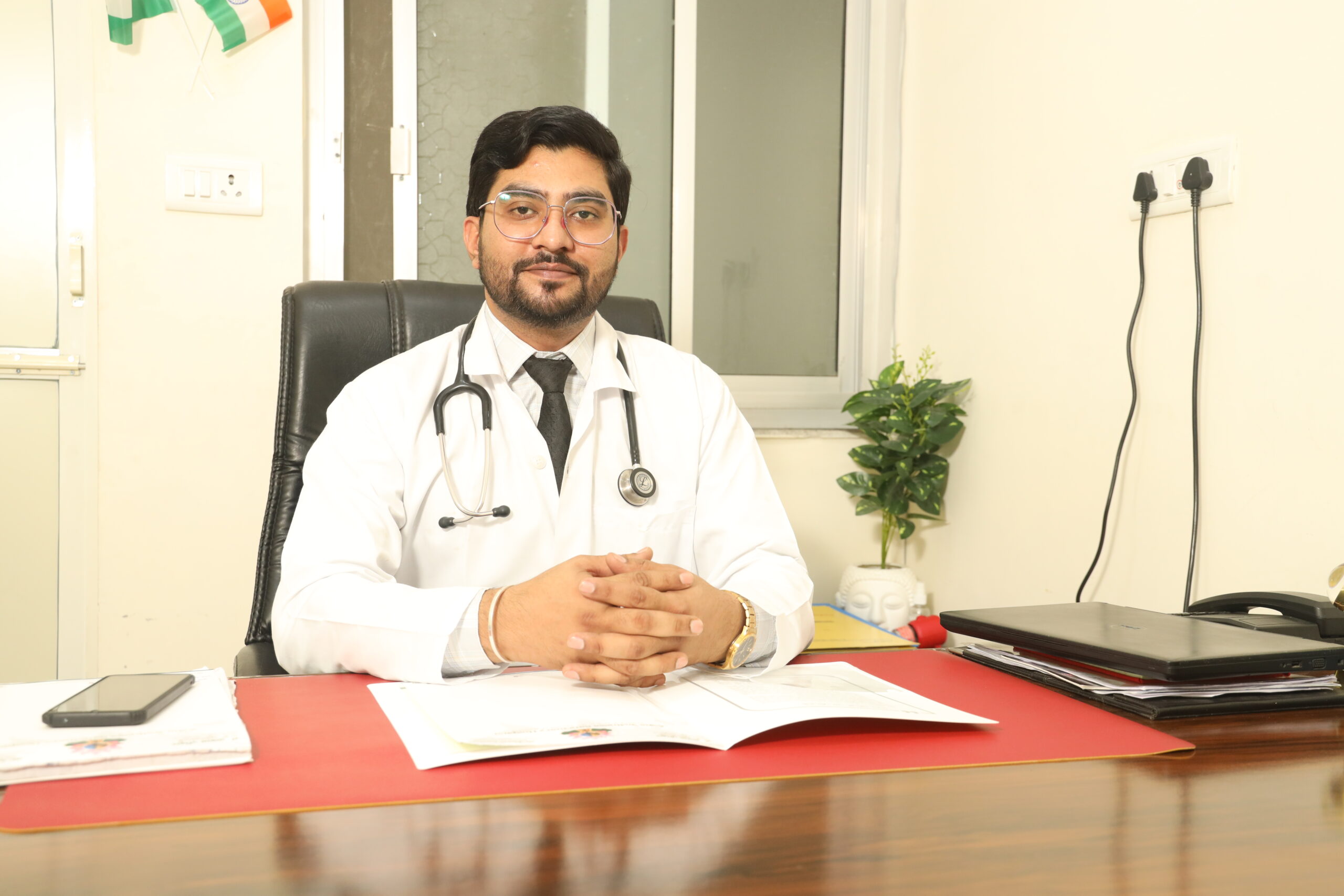
Dr. Akash Parihar
MD Psychiatry | QACP | LGBTQ+-Affirming Psychiatrist | Asha Wellness Sanctuary, Kota, Rajasthan
Dr. Akash Parihar is a psychiatrist with deep commitment to evidence-based, compassionate care for India's LGBTQ+ community. His published research on LGBTQ+ mental health in India — "Heteronormative Silence on Sexuality" (2020) — demonstrates his unique expertise in the intersection of queerness, minority stress, and psychiatric care in the Indian context.
He holds a QACP (Queer Affirmative Counselling Practice) certification — one of a small number of psychiatrists in Rajasthan with this specific qualification. His practice is based on the principle that being LGBTQ+ is never the problem to be treated. The problem is always stigma, discrimination, trauma, and lack of support — all of which are treatable.
"You do not need to be 'fixed.' You need to be heard, understood, and supported as your whole self. That is what I am here for."
📍 MPA 4, Mahaveer Nagar 2, near Central Public School, Kota, Rajasthan 324005
📞 +91-7300342858 | 📧 ashawellnesssanctuary@gmail.com
🕘 Mon–Sat: 9 AM–9 PM | Sun: 9 AM–12 PM
🏳️🌈 Monthly LGBTQ+ Wellness Newsletter
Monthly mental health tips, new research, legal updates, and community stories. The subject line always reads "Health & Wellness Newsletter" — discreet for all inboxes.
🔒 Privacy: Your address is never shared. Unsubscribe anytime. Subject line always discreet.