 SN Medical College
When Worry Becomes Your Whole World, We Help You Find Peace.
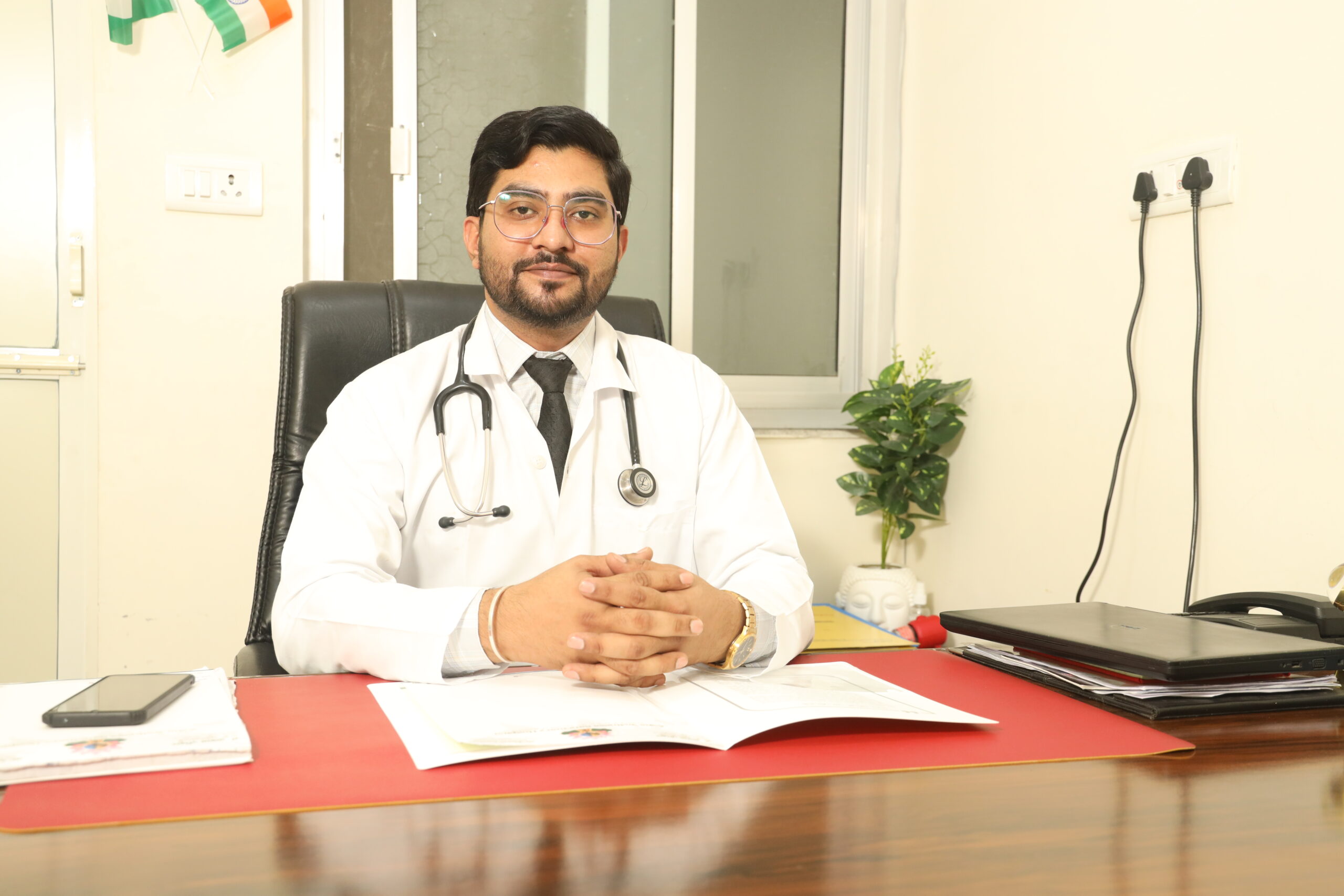
✦ Science & Soul in the Service of Wellness ✦At Asha Wellness Sanctuary, we treat anxiety not as a character flaw, but as a medical condition — one with clear neuroscience, evidence-based treatments, and a realistic path to recovery. Dr. Akash Parihar (MD Psychiatry) and Dr. Neha Mehra (RCI Psychologist) work together to give you comprehensive, compassionate care.

What Anxiety Really Feels Like
Not textbook symptoms — real experiences shared by people who live with anxiety.
Recognizing Anxiety Symptoms
Anxiety manifests across four domains. You may experience symptoms from one or all of these categories.
- Heart palpitations or racing heart
- Trembling, shaking hands
- Shortness of breath
- Sweating without exertion
- Nausea, stomach discomfort
- Headaches and muscle tension
- Dizziness or light-headedness
- Constant sense of dread or doom
- Feeling on edge or irritable
- Easily startled by small sounds
- Feeling overwhelmed often
- Mood swings, sudden tearfulness
- Feeling detached or unreal
- Fear of losing control
- Racing, intrusive thoughts
- Difficulty concentrating
- Catastrophizing (worst-case thinking)
- Memory and recall problems
- Overthinking and rumination
- Black-and-white thinking
- Constant "what if" questioning
- Avoiding triggers, places, people
- Procrastinating due to fear
- Excessive reassurance-seeking
- Compulsive checking behaviors
- Sleep disruption (early waking)
- Withdrawing from social life
- Difficulty completing daily tasks
12 Types of Anxiety Disorders
Each anxiety disorder has a distinct presentation and treatment pathway. Tap a card to expand.
Generalized Anxiety Disorder (GAD)
Persistent, uncontrollable worry about multiple areas of life — health, family, work, finances — for more than 6 months. Physical tension, fatigue, poor sleep.
Uncertainty, major life transitions, work stress, health concerns. Often worsened by caffeine and sleep deprivation.
Hyperactive amygdala, prefrontal cortex unable to "turn off" worry loop. Elevated baseline cortisol.
CBT (worry postponement, thought records), SSRIs/SNRIs, Buspirone, relaxation training.
Very good with treatment. 60-70% achieve significant remission within 6 months.
Panic Disorder
Sudden, intense panic attacks with heart pounding, breathlessness, dizziness, fear of dying or losing control. Lasting 5–20 minutes. Anticipatory anxiety between attacks.
Unexpected bodily sensations, crowded spaces, stress. Can become uncued (spontaneous) over time.
False alarm from the amygdala — interprets normal physical sensations as life-threatening. Catastrophic misinterpretation loop.
Interoceptive exposure therapy, SSRIs, breathing retraining. Highly treatable.
Excellent. 80%+ achieve full remission with proper CBT.
Social Anxiety Disorder
Intense fear of embarrassment, judgment, or humiliation in social/performance situations. Avoidance of meetings, phone calls, social gatherings.
Public speaking, meeting new people, eating in public, being observed while working.
Heightened fear of negative evaluation. Amygdala over-responds to social cues that the brain misreads as threats.
CBT with exposure hierarchy, social skills training, SSRIs. In India, cultural stigma often delays help-seeking.
Good with structured exposure therapy. 50-60% significant improvement.
Health Anxiety (Illness Anxiety)
Excessive preoccupation with having or developing a serious illness. Repeated self-examination, doctor visits, or Googling symptoms provides only brief relief.
Reading about diseases, physical sensations (normal or abnormal), media coverage of illness, death of a loved one.
Attentional bias toward bodily sensations, catastrophic interpretation, reassurance-seeking maintains the anxiety cycle.
CBT (attention training, ERP), reducing reassurance-seeking behaviors, SSRIs.
Moderate to good. Requires consistent work on reducing checking behaviors.
OCD-Related Anxiety
Intrusive, unwanted thoughts (obsessions) that cause anxiety, followed by repetitive behaviors or mental acts (compulsions) to reduce that anxiety temporarily.
Uncertainty, contamination fears, harm fears, symmetry concerns, moral/religious intrusive thoughts.
Hyperactive orbitofrontal cortex and striatum create an "alarm stuck on" effect. Compulsions provide brief relief but strengthen the loop.
ERP (Exposure and Response Prevention) — gold standard. SSRIs at higher doses than for depression.
Good with ERP. 60-70% respond significantly. OCD requires specialized treatment, not generic anxiety therapy.
Exam & Performance Anxiety
Mind going blank during exams, trembling, nausea, excessive study or avoidance. Extremely common in Kota students. Can derail otherwise capable students.
Competitive environment, parent expectations, rank anxiety, fear of judgment, previous failure experiences.
Stress hormones (cortisol, adrenaline) impair working memory and retrieval. The "threat" of the exam hijacks cognitive resources.
CBT (performance-based thought challenging), desensitization, sleep hygiene, mindfulness, time-limited medication if needed.
Excellent when addressed early. Most students recover fully within 2–3 months.
Specific Phobias
Immediate, intense fear response to a specific object or situation (heights, needles, dogs, flying, blood). Fear is disproportionate to actual danger.
Graduated exposure therapy is highly effective — often 3-8 sessions for simple phobias.
One of the most treatable anxiety conditions. 80-90% respond to structured exposure.
Relationship Anxiety
Constant worry about a partner's feelings, analyzing messages for hours, fear of abandonment, reassurance-seeking that strains the relationship. May relate to attachment insecurity.
CBT, attachment-focused therapy, couples counseling if needed. Dr. Neha Mehra offers specialized relationship counseling.
Good with therapy. Understanding attachment patterns is key.
Agoraphobia
Fear of situations where escape might be difficult or help unavailable — crowded places, public transport, open spaces, leaving home. Can result in housebound living.
Graduated exposure with safety signal reduction. Often develops after panic disorder — treating panic is essential.
Moderate to good. Severe agoraphobia requires longer treatment but full recovery is possible.
Separation Anxiety
Excessive fear of being separated from attachment figures. Common in children (school refusal) but also occurs in adults. Clingy behavior, nightmares about separation.
Family-based CBT, gradual separation exposure, psychoeducation for parents.
Very good when treated early. Parental involvement is key for children.
Performance Anxiety
Fear of performing under observation — public speaking, sports, music, presentations. Physical symptoms: trembling voice, shaking, mind blank, sweating.
CBT, beta-blockers (propranolol) for acute situational use, performance-based desensitization.
Excellent. Most people with situational performance anxiety respond to brief intervention.
PTSD-Related Anxiety
Anxiety triggered by trauma reminders. Flashbacks, nightmares, hypervigilance, emotional numbing, avoidance of trauma-related stimuli. Develops after traumatic events.
Trauma-focused CBT, EMDR, SSRIs. Requires specialized trauma-informed therapy approach.
Good with trauma-focused treatment. Recovery is possible but requires patient-centered pacing.
Understanding & Managing Panic Attacks
A panic attack is a sudden surge of intense fear or discomfort that peaks within 10 minutes. It is not dangerous and will pass — but it feels terrifying. Understanding what's happening physiologically helps defuse the fear of the fear itself.
You are safe. This will pass. Follow my lead.
How Anxiety Affects Your Body
Anxiety is not "just in your head." It creates measurable physical changes throughout the entire body. Tap a system to learn more.
The Brain Science of Anxiety
Anxiety is not weakness — it is a misfiring alarm system. Understanding the neuroscience removes shame and makes treatment logical.
Anxiety vs Normal Stress
Everyone feels stressed — but anxiety disorder is clinically distinct. Here's how to tell the difference.
The Kota Pressure System & Student Anxiety
Kota is the coaching capital of India — and also one of the highest-stress educational environments in the world. The mental health consequences are measurable and serious.
Signs a Kota Student Has Anxiety
- Waking at 3–4 AM with racing thoughts about ranks
- Unable to start studying despite knowing the material
- Physically ill (headaches, stomach pain) before tests
- Comparing themselves constantly with peers
- Withdrawing from friends, becoming isolated
- Crying without clear reason, mood swings
- Feeling like a burden to parents
- Mind going blank in mock tests despite preparation
What Parents Should Watch For
- Sudden drop in performance after a period of excellence
- Becoming quiet, withdrawn, or overly irritable
- Changes in eating or sleeping patterns
- Expressing hopelessness about the future
Anxiety in Real-Life Situations
Tap each card to see what anxiety actually feels like in this situation — and what helps.
What Happens in Therapy for Anxiety?
Treatment at Asha Wellness Sanctuary follows a structured, session-by-session evidence-based pathway.
Full psychiatric evaluation: history, symptom mapping, severity scoring (GAD-7, HAM-A), medical rule-out, diagnosis, and collaborative goal-setting.
Learn the neuroscience of your anxiety. Identify automatic negative thoughts (ANTs). Begin thought diaries and anxiety monitoring. Introduce grounding and breathing tools.
Cognitive restructuring — challenging distorted thoughts systematically. Behavioral experiments to test anxiety predictions. Progressive relaxation training. Worry postponement protocol.
Graduated exposure to feared situations. Interoceptive exposure for panic. Social experiments for social anxiety. Building a hierarchy of challenges and working through them.
Consolidating gains. Building a personal anxiety toolkit. Identifying early warning signs. Tapering treatment frequency as independence grows.
Grounding & Calming Toolkit
Evidence-based techniques you can use right now to regulate your nervous system.
📦 Box Breathing (4-4-4-4)
Used by Navy SEALs, Olympic athletes, and ER physicians to regulate the nervous system rapidly.
✋ 5-4-3-2-1 Grounding
Tap each item as you identify it. This engages the sensory cortex and interrupts the anxiety spiral.
Free Anxiety Self-Assessment
Validated screening tools used clinically. For educational purposes — not a substitute for professional diagnosis.
GAD-7 (Generalized Anxiety Disorder Scale) — Over the last 2 weeks, how often have you been bothered by the following?
Panic Severity Screener — In the past month, how much have these experiences affected you?
Health Anxiety Screener — How much do these statements apply to you in the last month?
These screeners are for educational purposes. A clinical diagnosis requires evaluation by a qualified mental health professional. Book a consultation →
Meet Your Expert Doctors
A psychiatrist and psychologist working together — the gold standard for anxiety treatment.
Real Recoveries, Real Words
"Dr. Akash explained my anxiety in scientific terms I could finally understand. No jargon — just clarity. The treatment was gentle, effective, and I felt genuinely heard for the first time in years."
"After years of panic attacks that made me afraid to leave home, I found real relief here. Dr. Neha's CBT sessions completely changed the way I think about my anxiety. I am a different person."
"As a Kota coaching student, I was drowning in exam anxiety. My mind would go blank in tests despite knowing everything. This clinic gave me my confidence back and I cleared my exam."
"I was convinced I had a serious heart condition — every palpitation sent me to Google and then emergency. Dr. Akash diagnosed health anxiety and I have not been to emergency in 8 months."
"Social anxiety was ruining my career — I avoided every presentation, every meeting. Six months of therapy with Dr. Neha and I just gave my first public talk to 200 people. I cried after."
"Sending my son to Kota was the most difficult decision. When he developed severe anxiety, we brought him to Asha Wellness. The care, the follow-up, the compassion — we felt supported throughout."
Explore Other Conditions We Treat
Frequently Asked Questions
Ready to Break Free From Anxiety?
Join 500+ patients who have found peace at Asha Wellness Sanctuary. Same-day appointments available.
Visit Us
Kota, Rajasthan 324005
Dr. Neha: Mon–Sat 3–8 PM | Sun 9 AM–12 PM

Social Anxiety Screener (SPIN-adapted) — Rate how much the following have bothered you this week.